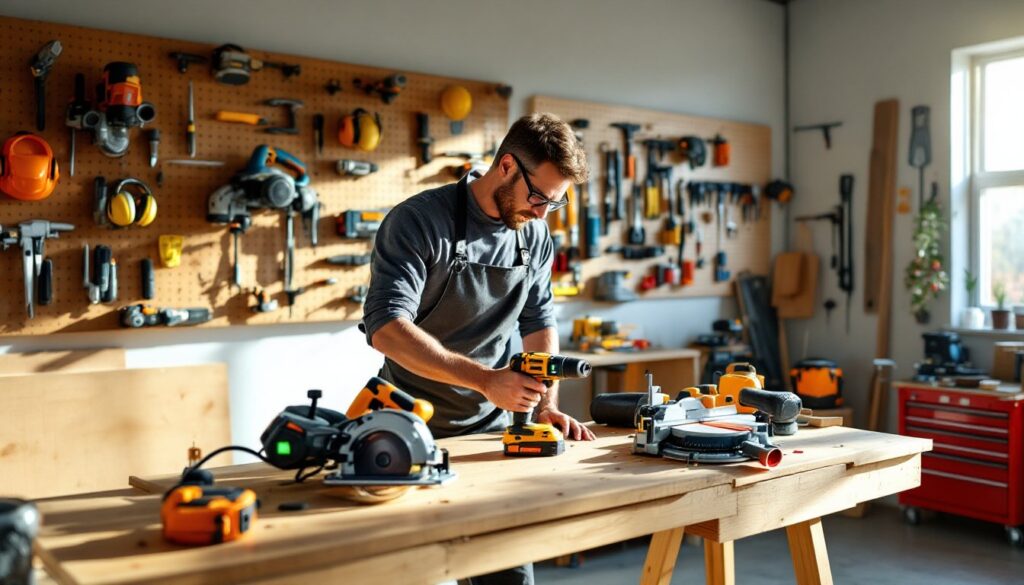

Whether you’re hanging a picture, building a deck, or tackling your first kitchen remodel, the right hand tools make all the difference between frustration and success. Hand tools form the backbone of any DIYer’s workshop, they’re reliable, affordable, and don’t require an outlet. Unlike power tools, which have their place, hand tools teach you control and precision while building muscle memory that carries across dozens of projects. This guide covers the essential types of hand tools every homeowner should own, understand, and maintain properly. You don’t need every tool immediately, but knowing what each one does and when to use it will accelerate your learning curve and help you tackle projects with confidence.
Table of Contents
ToggleKey Takeaways
- Master the six main categories of hand tools—striking, cutting, fastening, gripping, measuring, and chisels—to confidently tackle any DIY project without power tools.
- Choose the right tool size and type for each task: a 16 oz claw hammer for general work, a 25-foot tape measure for accuracy, and a 2-foot level for most home projects.
- Types of hand tools require proper maintenance to perform reliably—keep hammer faces clean, replace dull utility knife blades frequently, and sharpen chisels on a whetstone every few uses.
- Start your hand tools collection with essentials like a claw hammer, handsaw, adjustable wrench, tape measure, and level, then add specialized tools as your projects demand them.
- Sharp, well-maintained hand tools reduce frustration, prevent injury, and deliver professional-quality results—a dull chisel bruises wood while a sharp one slices cleanly.
Striking Tools: Hammers, Mallets, and Impact Drivers
Striking tools transfer energy from your arm into fasteners or materials. The claw hammer (16 oz is standard for general work) remains the most versatile. The head weighs enough to drive nails without arm strain, while the claw extracts them cleanly when you inevitably bend one. For finish work and trim, a 20 oz finish hammer has a smoother face and narrower profile, reducing marks on delicate trim.
Ball-peen hammers (8–16 oz) are specialized for metalwork and riveting, not general construction. Mallets, rubber or wooden faced, drive chisels without damaging their handles and set materials without marking them. Use a rubber mallet when installing flooring or adjusting joints: use a wooden mallet for fine carpentry work where you need control.
Manual nail sets drive nail heads below the surface for a finished look on trim and baseboards. A 1/16-inch diameter set works for finish nails: larger sets handle common nails. Always wear safety glasses when striking: a missed swing or glancing blow can send debris flying. Keep your hammer face clean and free of rust, a corroded face won’t strike square and will twist nails. Store mallets with heads up to prevent the face from flattening under their own weight.
Cutting Tools: Saws, Shears, and Utility Knives
Cutting tools span a wide spectrum, from precise to rough. A crosscut handsaw (10–12 teeth per inch) cuts across wood grain and works fine for rough framing: a ripsaw (5–6 TPI) cuts parallel to grain but is less common in modern workshops because circular saws dominate that role. A Japanese pull saw (15–20 TPI) delivers exceptionally clean crosscuts in hardwood and feels easier than Western saws, the blade pulls rather than pushes, reducing hand fatigue.
Coping saws have a thin blade under tension in a C-shaped frame and excel at curved cuts and intricate shapes. Thread the blade through a starting hole, tension the frame, and cut. Hacksaws cut metal and plastic with a hardened blade tensioned in an aluminum frame. Standard blades have 24 or 32 TPI: finer teeth give cleaner cuts but cut slower.
Utility knives (box cutters with replaceable blades) cut drywall, insulation, roofing felt, and flooring underlayment. Always cut away from your body and keep your free hand behind the blade. A linoleum knife or flooring knife has a wider blade and handles heavier materials. Dull blades skip and slip: replace them frequently, they’re cents per blade and save hours of frustration. Keep a first aid kit nearby: cuts happen, and you want to treat them immediately.
Fastening Tools: Screwdrivers, Wrenches, and Socket Sets
Screwdrivers must match the screw head or you’ll strip it. Phillips head screwdrivers have an X-shaped tip and come in sizes #1 (small) through #4 (large). Slotted drivers fit a single line and are less common but still appear in older hardware. Square drive (Robertson) screws use a square socket and barely strip, they’re popular in Canada and increasingly used in the US. Pozidriv heads resemble Phillips but with additional radial lines and need a matching driver.
Multi-bit screwdrivers combine multiple tips in one handle and save space, though each individual tip is thinner than a full-size driver. For serious work, buy full-size drivers in the types you use most. An offset screwdriver (also called a bent driver or right-angle driver) reaches into tight corners where a straight driver won’t fit.
Adjustable wrenches fit any size nut from the wrench’s minimum to maximum range. Size is measured by the wrench’s length: 8 inches, 10 inches, etc. Always adjust the wrench so the load faces the fixed jaw, not the adjustable jaw, or it’ll slip. Socket wrenches with a ratchet drive are faster and less tiring for repetitive work. A basic socket set in 1/4-inch and 3/8-inch drives with metric and SAE sizes covers most home repairs. Sockets come in shallow and deep versions: deep sockets fit over protruding studs and bolts.
Gripping and Holding Tools: Pliers, Clamps, and Vises
Pliers grip, bend, and cut wire. Slip-joint pliers (also called adjustable pliers) open in two positions via a pivot hole. They’re general-purpose but less efficient than specialized types. Locking pliers (Vise-Grips, a brand name used generically) clamp down and stay locked until you release the trigger, invaluable for stuck bolts, stripped screw heads, or temporarily holding stock while you work. Needle-nose pliers (long-nose pliers) access tight spaces and bend wire precisely. Diagonal-cutting pliers (dikes) cut wire cleanly and fit in small hands. Keep pliers organized: jumbled drawers lead to lost tools and bent handles.
C-clamps hold work to a bench or hold two pieces together while glue dries. A 2-inch or 4-inch clamp covers most small projects. Bar clamps (also called F-clamps) span longer distances and deliver parallel clamping pressure, essential for gluing wide panels. A hand screw clamp (wooden jaws with threaded screws) grips without marring fine wood surfaces. Always place a scrap block between the clamp jaw and your work to distribute pressure and prevent marring. A bench vise bolted to your workbench holds work securely while you saw, plane, or chisel. Soft jaw inserts protect finished surfaces.
Measuring and Marking Tools: Tapes, Levels, and Squares
No project succeeds without accurate measurements. A 25-foot tape measure with a 1-inch-wide blade is the workhorse, the width prevents the blade from bending excessively when extended. Mark your tape with a permanent pen at common dimensions (16 inches on-center for studs, 24 inches for joist spacing, etc.) to speed up layout work.
Levels show whether a surface is plumb (vertical), level (horizontal), or at a consistent angle. A 2-foot level works for shelves, door frames, and granite countertops. A 4-foot level is more accurate over longer runs like walls. Torpedo levels (12–24 inches) fit tight spaces. Always check your level’s accuracy by placing it on a known level surface, reading it, then flipping it 180 degrees: if the bubble moves, the level’s damaged. Measuring tools in the workshop directly impact project quality.
Squares layout lines and check angles. A framing square (also called a carpenter’s square) has a long arm (24 inches) and short arm (16 inches) and handles layout for rafters and stairs. A speed square (triangular with a pivot and ruler) marks angles quickly and serves as a saw guide. A combination square adjusts to any length and checks both 90° and 45° angles. Mark lines lightly with a pencil first: you’ll erase them if you misread the layout. Precision tools ensure cuts and installations align correctly.
Chisels and Gouges: Shaping and Detail Work
Chisels cut and shape wood with precision no saw can match. A bench chisel (3/8 inch, 1/2 inch, 3/4 inch, and 1 inch widths) handles mortising, fitting hinges, and refining joinery. Japanese chisels are thinner and handle differently than Western chisels but deliver exceptional control. Always place your free hand behind the blade, never in front of it, even “controlled” cuts slip occasionally.
Gouges have curved blades and shape concave profiles, rounds, and decorative details. A 1/4-inch sweep (the curve depth) works for relief carving: a deeper sweep rounds edges. Keep chisels sharp: dull tools demand excessive force, slip unpredictably, and splinter wood instead of slicing cleanly. Honing on a whetstone or leather strop takes five minutes and restores edge keenness. A sharp chisel on wood should shave arm hair without effort. Workshop tools and equipment like sharp chisels make the difference between frustrating and rewarding work. Store chisels in a wooden block or roll: loose chisels dull against other tools and can cut your hand reaching into a toolbox.
Conclusion
Mastering hand tools isn’t about owning every option, it’s about understanding what each tool does and using it correctly. Start with a claw hammer, handsaw, adjustable wrench, tape measure, and level. Add specialized tools as your projects demand them. Quality matters: a cheap hammer that bounces off nails wastes energy: a sharp chisel cuts clean surfaces while a dull one bruises wood. Maintain your tools, clean rust off, keep blades sharp, replace handles that split, and store them where you can actually find them. A well-organized workshop supplies collection grows over time into a capable, reliable toolkit. Visit resources like This Old House and Fix This Build That for project-specific tool guidance. Your toolbox is an investment in your skills, treat it that way.